
Introduction
Challenges in the Beer Brewing Process
In beer brewing, maintaining a stable production process is essential for ensuring consistent quality and taste.
Breweries face multiple challenges during brewing and fermentation, particularly when managing liquid levels in tanks such as mash tuns, wort kettles, fermentation tanks, and storage vessels.
Fluctuating liquid levels can lead to operational issues including process interruptions, overflow risks, inconsistent fermentation conditions, and unnecessary product loss.
In modern breweries—especially those aiming for automation and labor efficiency—manual level checks are no longer sufficient to guarantee stable operation.

Importance of Level Monitoring in Brewery Tanks
Accurate level monitoring plays a critical role in each stage of the beer brewing process.
From wort preparation to fermentation and final storage, precise level measurement supports:
- Stable process control and repeatability
- Improved beer quality and consistency
- Early detection of abnormal conditions such as overfilling or leakage
- Automated operation with reduced operator workload
For breweries operating multiple tanks simultaneously, reliable level monitoring becomes a key foundation for process visualization and brewery automation.
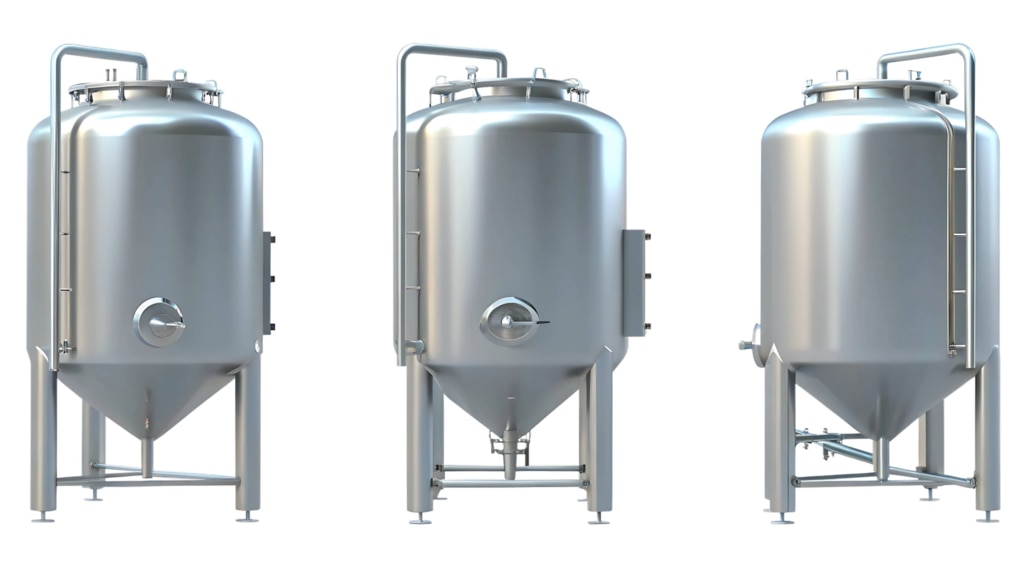
Production Processes | Level Measurement Applications | |
Raw Material Charging | The process of charging malt, water, and other brewing ingredients into the brewing system. | Raw Material Silo / Malt Silo, Raw Water Tank, Activated Carbon Tank |
Mashing | A process in which starches in the malt are converted into fermentable sugars by enzymatic activity. | |
Lautering | The separation of wort from the spent grains after the mashing process. | Spent Grain Hopper |
Wort Boiling | A boiling step where hops are added, enzymes are inactivated, and the wort is sterilized. | Cyclone Hopper, Chemical and Powder Tank for Air Blowing |
Wort Cooling and Clarification | The process of cooling hot wort and removing solid particles, typically using plate heat exchangers and whirlpool separation. | |
Fermentation | A biological process in which yeast converts sugars into alcohol and carbon dioxide. | Yeast Tank / Yeast Storage Tank, CO₂ Recovery Tank |
Maturation / Conditioning | A process to stabilize flavor and improve beer quality, including lagering when applicable. | |
Filtration and Finishing | Removal of remaining yeast and fine particles, followed by final quality adjustment before packaging. | Caustic Soda Tank |
Filling and Packaging | Filling beer into cans, bottles, or kegs, followed by packaging for shipment. | Wastewater Sludge Tank |
Solution
Solved by Level Sensors of Matsushima Measure Tech

Our References
Raw Material Silo / Malt Silo, Raw Water Tank, Spent Grain Hopper, Cyclone Hopper
Our References
Spent Grain Hopper, Yeast Tank / Yeast Storage Tank, Caustic Soda Tank, Wastewater Sludge Tank
Our References
Chemical Tank for Air Blowing
Our References
Powder Tank for Air Blowing
Our References
Activated Carbon Tank
Our References
Dust Collectors, Bag Filters
Key Benefits
Achieved by the technology
After introducing accurate level monitoring, the brewery experienced significant improvements in operational stability.
Unexpected process interruptions were reduced, and production flow became more predictable and easier to manage.
The ability to continuously monitor tank levels helped optimize brewing timing and fermentation control, contributing to improved beer quality and reduced product loss.
Additionally, automated monitoring reduced operator workload and supported safer, more efficient brewery operation.
This case demonstrates how level measurement technology can effectively support stable beer production and long-term process optimization in modern brewing facilities.
References
Related Applications
Related Products
CONTACT
Please feel free to ask us if you have any questions, inquiries or want our support.
Click here to download documents.
Click here for any questions.
Knowledge
Trivia, trends or information mainly for technologies.
FAQ
Frequently Asked Questions.
Seminar
WEBINAR archives available for free viewing.

© Matsushima Measure Tech