What are Dust Monitors
Types, Working Principles & Applications Explained


Types, Working Principles & Applications Explained
What are Dust Monitors? Particle Counters?
Dust monitors are measuring instruments that measure dust concentration (mg/m3) in the air and there are 3 types which are triboelectric, light scattering and light transmission principles.
Particle counters are one of the kind but it measures number of physical microparticles (pcs/m3) instead of concentration (mg/m3).
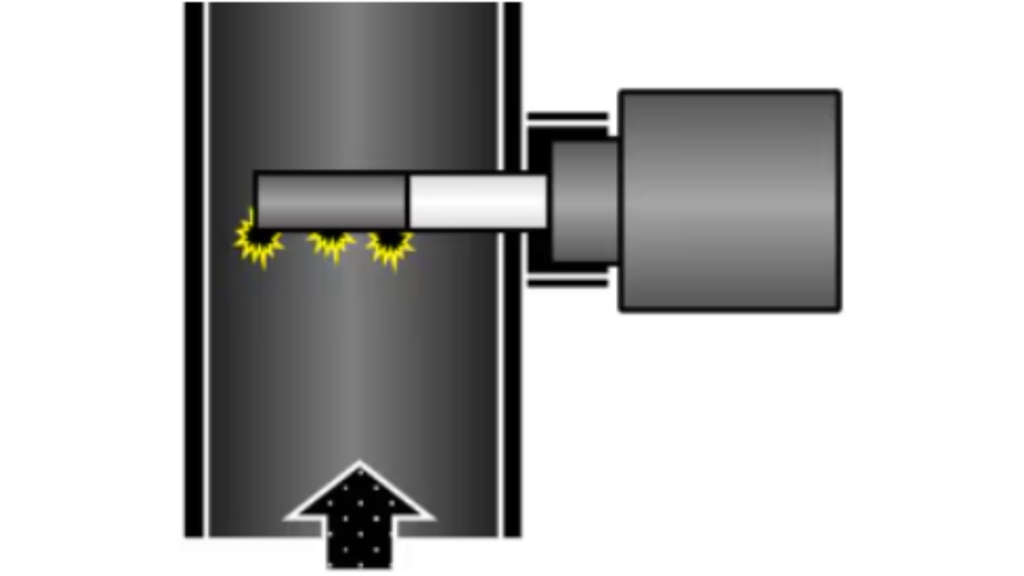
Triboelectric charging occurs when two materials are brought into contact then separated or slide against each other. Triboelectric dust monitor receives the electrostatic movement at the probe and converts them into analog signal in proportion to the dust concentration.
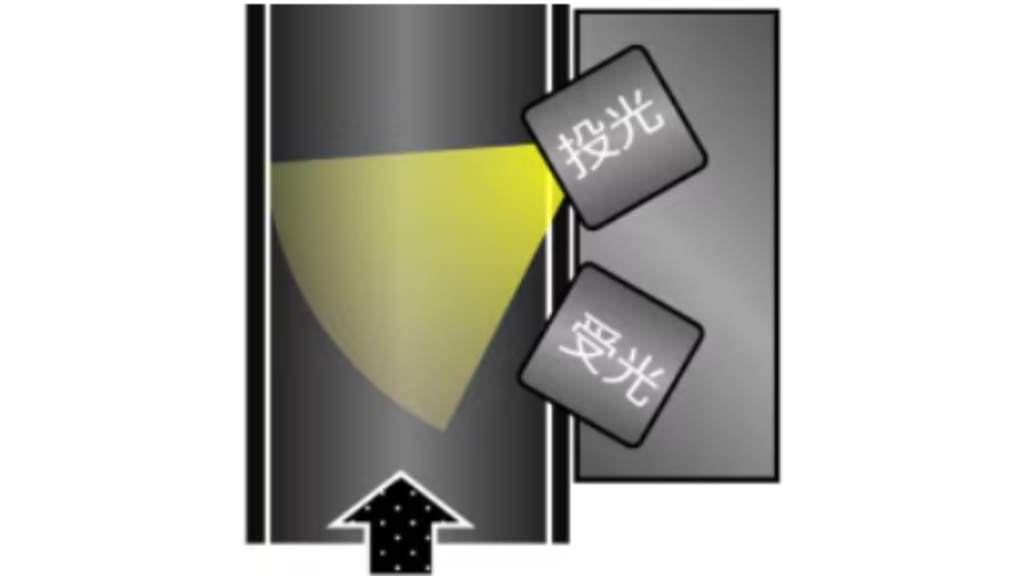
Light scattering dust monitor emits light into the process, receives light scattered from particles and count them as dust concentration signal.
Basic principle is same as the particle counter.
Refer to the below "Working Principle of Particle Counters".
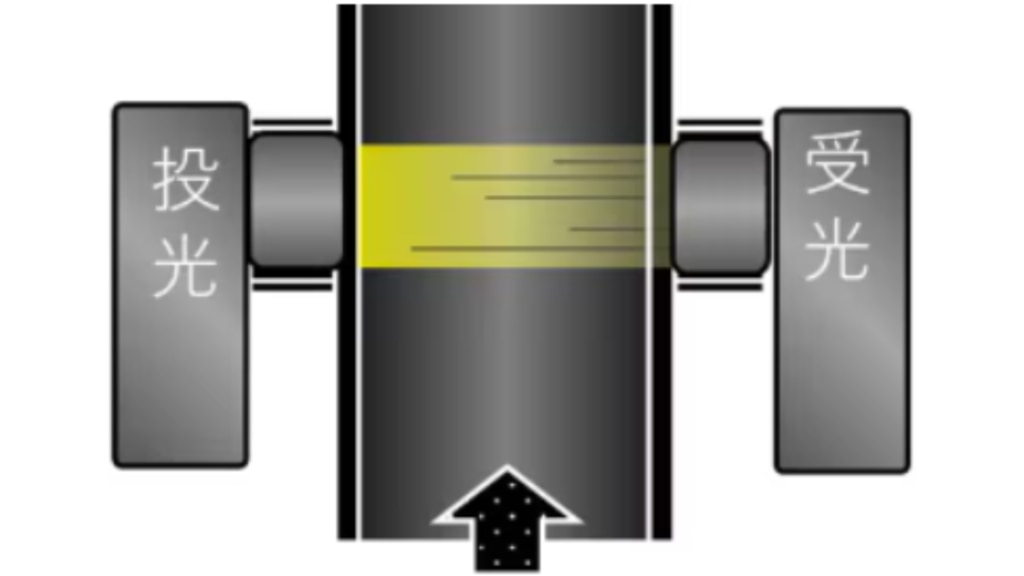
Light transmission dust monitor emits light from emitter and the receiver receives the light attenuated by flying dust in between.
This attenuation is in proportion to the dust concentration.
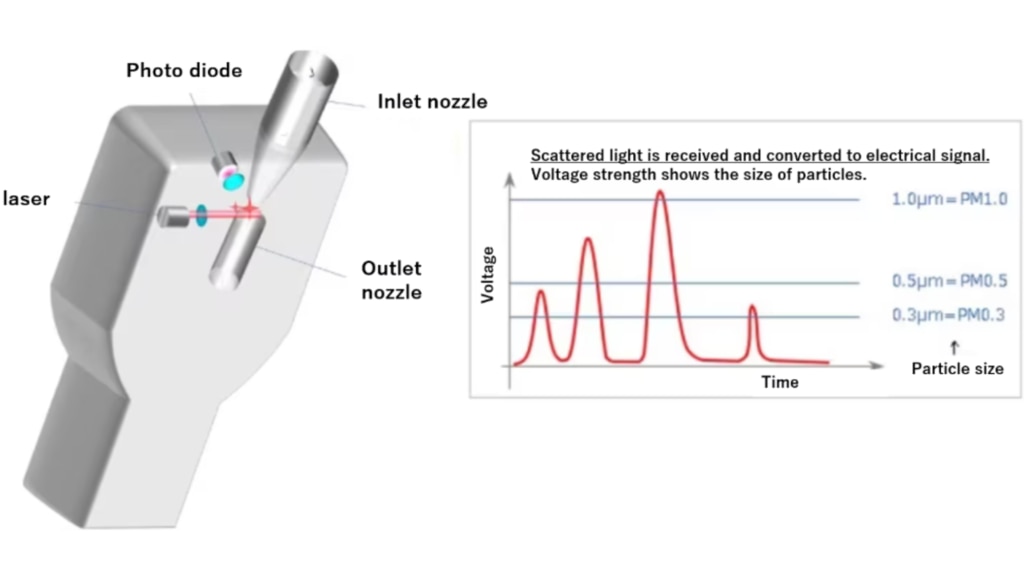
Particle counters use the light scattering method. It sucks ambient air from the inlet nozzle and emits laser light to the area.
Then, emitted light scatters when it interacts with particles. A photodiode in the particle counter detects the scattered light and converts into an electrical signal.
Particle size is determined based on the strength of the voltage signal and number of particles is calculated by number of waveforms.
Main difference between particle counters and dust monitors is the unit of measurement.
Particle counters measure "number of particles in the air (pcs/m3)" and dust monitors measure "particle concentration in the air (mg/m3)".
In case of low dust concentration situation, it is better to use particle counters (pcs/m3) because it's resolution is high and dust concentration value (mg/m3) is too low to use dust monitors.
But on the other hand, particle counter value (pcs/m3) becomes too high and difficult to make judgement in case of high dust concentration.
In this case, it is better convenient to use dust monitors (mg/m3).
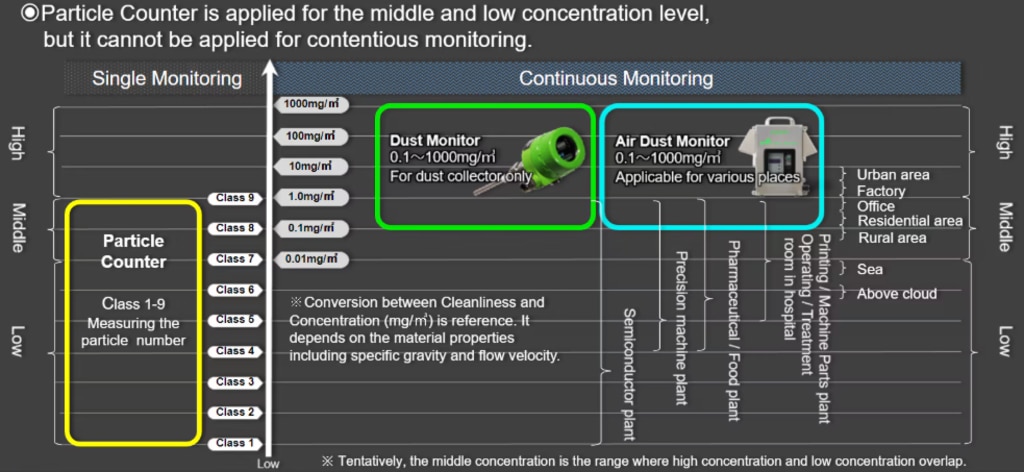
Easier way to make judgement whether particle counters or dust monitors should be used is whether the dust concentration to be measured is higher or lower than the concentration level of general office or suburban outdoor.
Dust monitors are better in case it's higher than it.
Particle counters are better if it's lower than it.
In addition, particle counters are single measurement method.
Dust monitors are continuous method generally equipped with analog signal (DC4-20mA) for the continuous measurement output and have a few types to suit for each application.
Please refer to the positioning map below for more details.
Applications for Particle Counters | Applications for Dust Monitors |
① Clean room in semiconductor factories | ① Dust collector leakage monitoring |
② Clean room in precision equipment producers | ② Dust generating work place like tunnels, demolition work, factories, etc. |
③ Clean room in pharmaceutical, food processing and beverage producers | ③ Welding fume |
④ Hospital operating room, etc. | ④ Offices, commercial facilities, etc. |
Generally Particle Counters are used to monitor cleanliness in the place where cleaner condition (than normal) is required and Dust Monitors are used to monitor abnormal dust concentration raise in the normal place.
Please feel free to ask us if you have any questions, inquiries or want our support.
Click here to download documents.
Click here for any questions.
Trivia, trends or information mainly for technologies.
Frequently Asked Questions.
WEBINAR archives available for free viewing.
© Matsushima Measure Tech