What are River Water Level Transmitters?

Types, Working Principles & Features

Introduction

What are River Water Level Transmitters?

River water level transmitters are instruments used to measure and monitor water levels in rivers, dams, tidal areas and other bodies of water.

There are seven (7) popular types of transmitters such as radar type, ultrasonic type, float type, guide rope type, capacitance type, pressure type and differential pressure type.

Radar type river water level transmitter is the latest technology and known as the most reliable system.
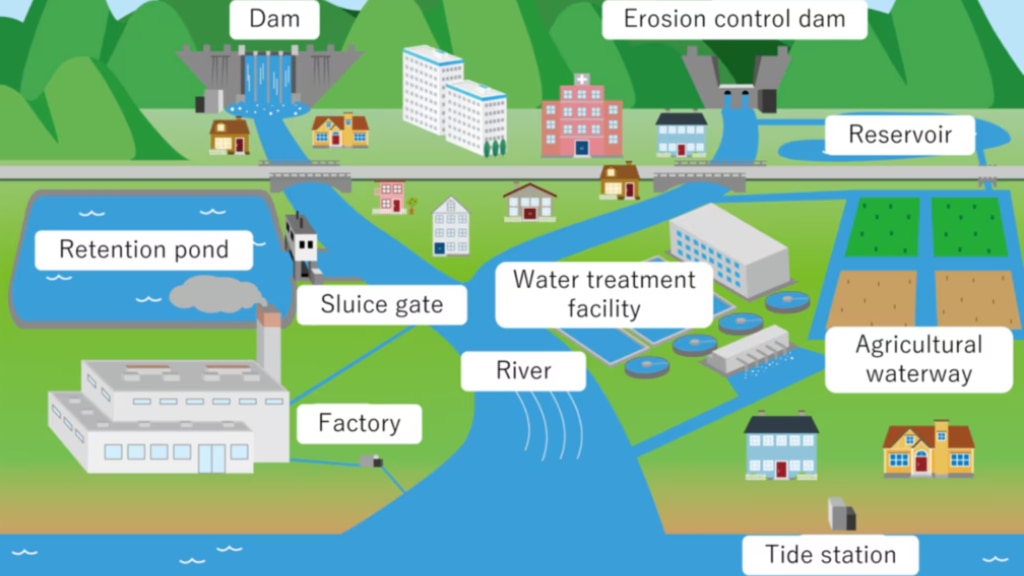
River Water Level Transmitter

Overview of River Water Level Transmitters

Working Principles, Features and Disadvantages

1. Radar Level Transmitter

Working Principle

A radar-type river water level transmitter is a non-contact level meter. The transmitter measures the time required for microwave pulses emitted from the sensor to be reflected by the water surface and return to the sensor.

This time is converted into the empty scale distance, which represents the distance from the sensor reference point to the measured surface.
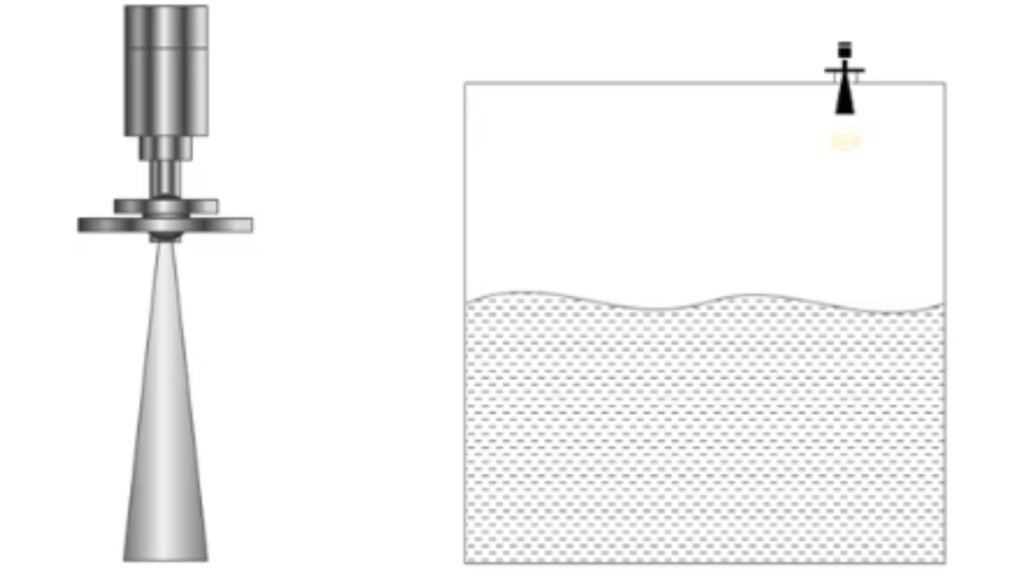
Radar River Water Transmitter

Features

  • Measurement performance is not affected by temperature variations or gas composition.
  • Microwave signals can penetrate dust and vapor, ensuring stable measurement.
  • Measurement is insensitive to fine particles, such as mist or steam.
  • Since the operating principle is not based on air vibration, measurement accuracy is not influenced by wind.

Disadvantages

  • When the measured material has a low relative permittivity, the reflected signal may be weak or may pass through the surface, resulting in unstable or impossible measurement.
  • Measurement accuracy may be affected by condensation on the tank ceiling. In high internal pressure conditions, condensation tends to form a continuous water film rather than droplets. Since microwave signals cannot penetrate a water film, measurement may become impossible. 
    In such cases, air purging is an effective countermeasure.

2. Ultrasonic Level Transmitter

Working Principle

This is a non-contact level transmitter that uses ultrasonic waves.

The ultrasonic level transmitter measures the time of flight of an ultrasonic pulse emitted from the sensor, reflected by the target surface, and received back at the sensor.

The measured time is converted into the distance from the sensor to the measured surface.
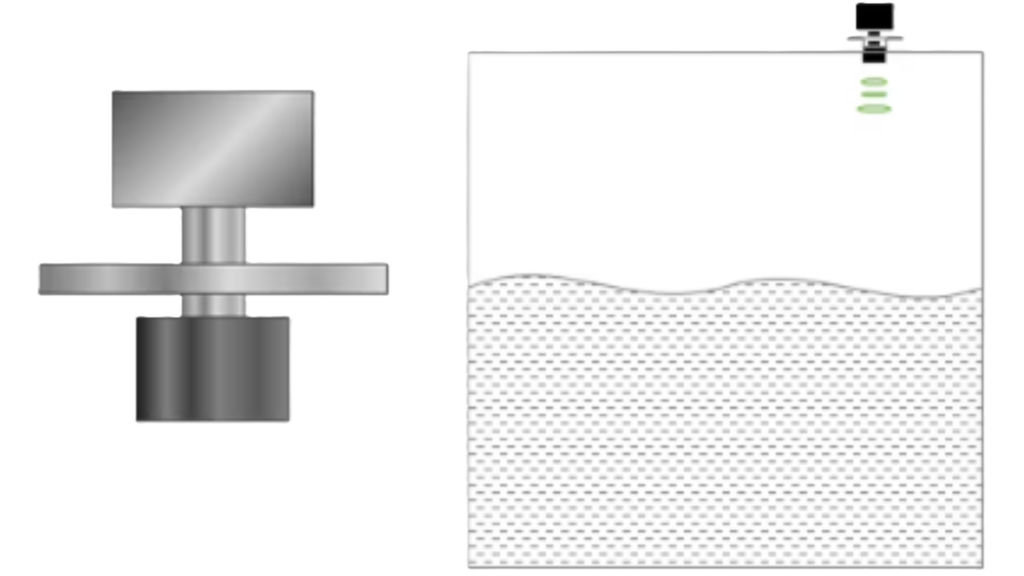
Ultrasonic River Water Level Transmitter

Features

  • Provides cost-effective level measurement without physical contact with the measured medium.

Disadvantages

  • Dust, steam, or gas can interfere with ultrasonic signal propagation, causing unstable or missed measurements.
  • Condensation caused by steam on the sensor surface may generate false echoes and signal attenuation.
  • Variations in temperature or gas composition within the measurement area can change the speed of sound, resulting in measurement errors.

3. Float Level Transmitter

Working Principle

A float-type level transmitter uses a float suspended by a stainless steel tape, which floats on the liquid surface and follows changes in the liquid level.

The empty distance is determined by continuously measuring the length of the tape.

Float-type level transmitters are available in spring-balance type, sealed-pipe type, and counterweight type configurations.
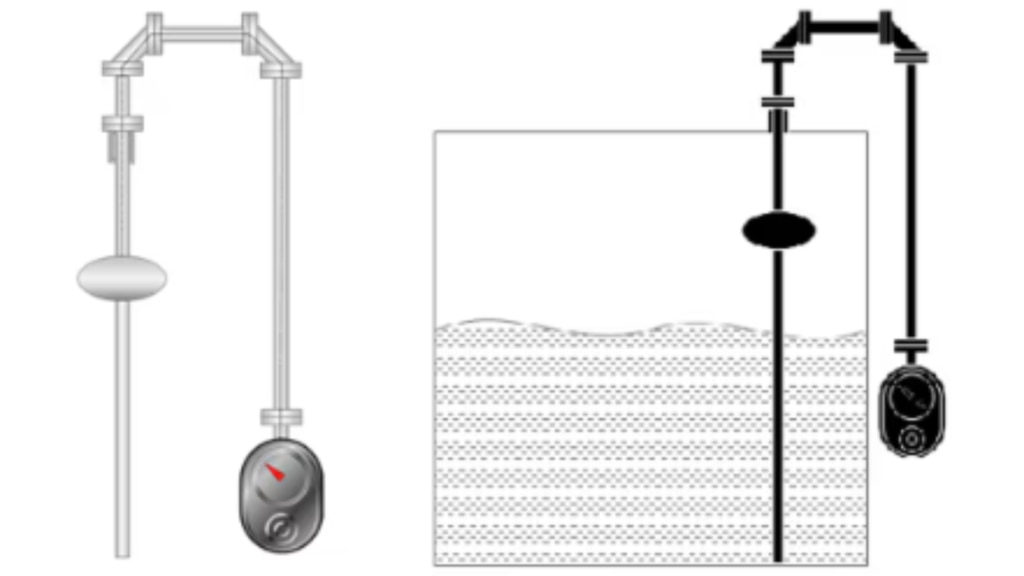
Float River Water Level Transmitter

Features

  • Simple and robust design ensures accurate and reliable level measurement across a wide range of tank sizes.

Disadvantages

  • Adhesion of dirt, floating matter, or solids can restrict float movement and cause inaccurate level detection.
  • Accumulation of solids on the float may result in measurement errors.
  • Requires regular maintenance due to consumable and mechanical components.
  • In stilling or breakwater pipes, adhesion may prevent proper float operation.

4. Guided Wave Level Transmitter

Working Principle

A guided wave level transmitter emits microwave pulses along a probe (rod or cable) suspended from the tank ceiling into the tank.

It measures the time of flight of the reflected signal returning from the measured surface and converts it into the empty distance.
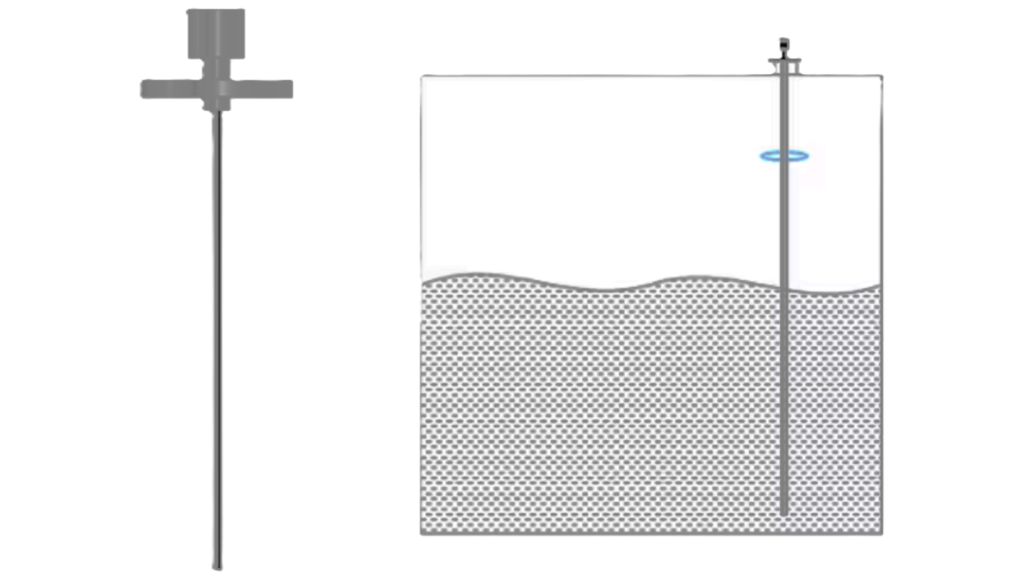
Guided Wave River Water Level Transmitter

Features

  • Since the microwave signal is guided along a probe, beam spreading is not a concern, making the transmitter well suited for installation in narrow or confined spaces.

Disadvantages

  • Adhesion or buildup on the probe may cause false reflections and inaccurate measurements.
  • Probe damage, such as wire kinking or breakage, can introduce noise into the reflected signal.
  • Accumulation of solids or crystallized materials may prevent detection of the correct reflection, leading to undetected abnormal level changes.

5. Capacitance Level Transmitter

Working Principle

A capacitance level transmitter measures level based on changes in electrical capacitance.

A capacitor is formed between the probe electrode suspended from the tank ceiling and the tank wall.

When the measured material enters the space between the electrodes, the capacitance changes in proportion to the level.

This change is detected and converted into a level measurement.
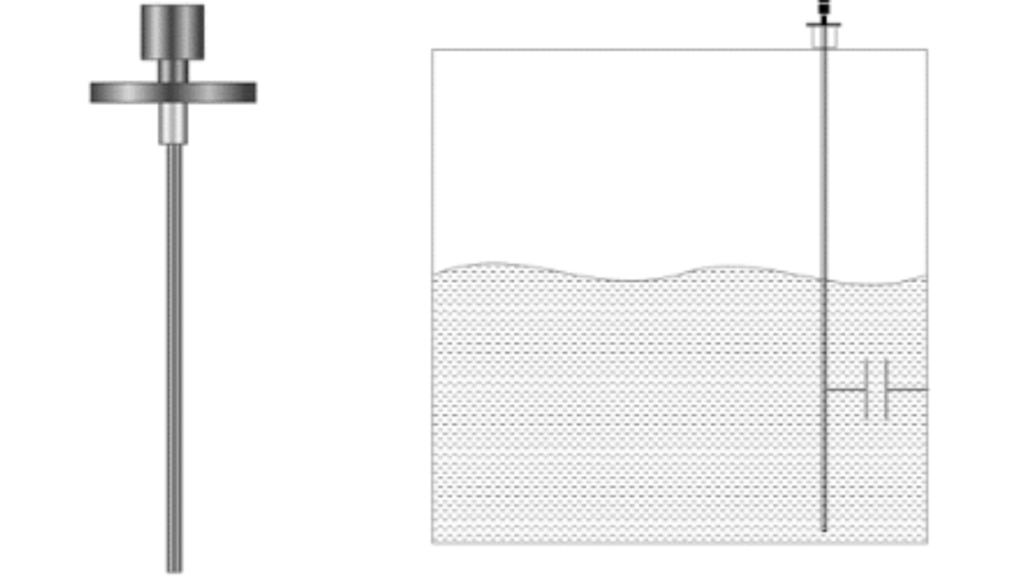
Capacitance River Water Level Transmitter

Features

  • Suitable for installation in narrow spaces where sensor placement is limited.

Disadvantages

  • Susceptible to contamination and buildup on the probe.
  • Requires tank emptying for zero adjustment.
  • Variations in dielectric constant can cause measurement errors.

6. Pressure Level Transmitter

Working Principle

A pressure-type level transmitter measures liquid level by detecting changes in hydrostatic pressure using a diaphragm.

The measured pressure is proportional to the liquid head and is converted into a level signal.

This measurement method is applicable only when the pressure above the liquid surface is at atmospheric pressure.
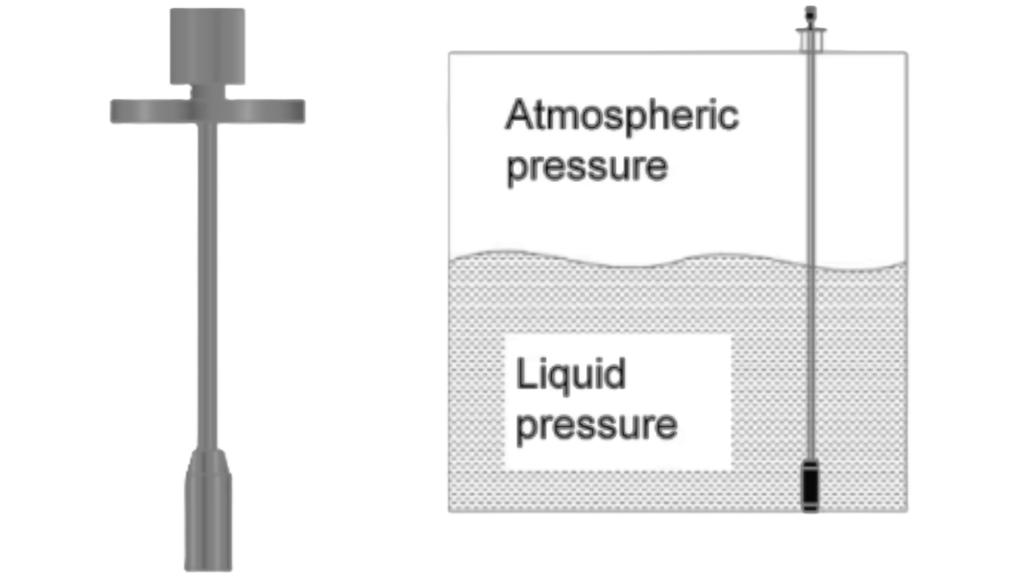
Pressure River Water Level Transmitter

Features

  • Easy to install, even in locations with limited installation space.

Disadvantages

  • Foam, adhesion, or sedimentation can reduce measurement accuracy.
  • Changes in liquid density (specific gravity) require adjustment or recalibration.
  • Requires tank emptying for maintenance.
  • In river applications, debris or driftwood impact may cause sensor malfunction.

7. Differential Pressure Level Transmitter

Working Principle

A differential pressure level gauge consists of two pressure-sensing elements: one that measures the liquid pressure and another that measures the internal tank pressure.

The liquid level is determined by subtracting the tank pressure from the liquid pressure.
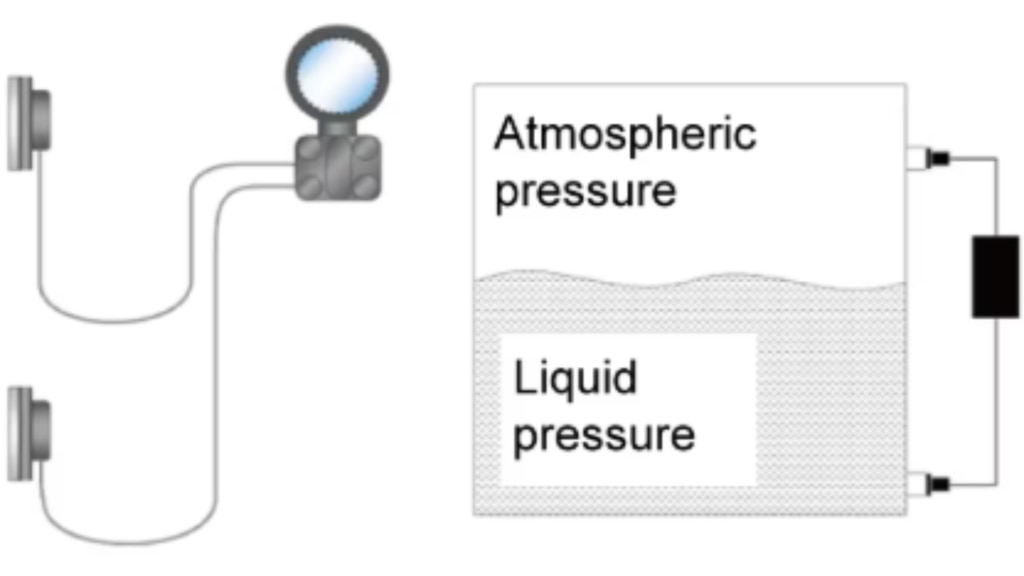
DP River Water Level Transmitter

Features

  • Unaffected by pressure changes inside the tank.

Disadvantages

  • Foam, air bubbles, or solids can reduce measurement accuracy.
  • Changes in liquid density require adjustment or recalibration.
  • Requires tank emptying for maintenance.

Practical Selection Advice

When selecting a river water level transmitter, consider the environmental conditions, maintenance requirements, and measurement reliability for your application.

Non-contact radar level transmitters are generally the most versatile choice, as they provide stable, continuous monitoring without contact with the water surface, and are unaffected by wind, temperature changes, or vapor.

For harsh environments or long-term outdoor monitoring, radar technology often delivers the most reliable and low-maintenance solution.

References

Related Applications

Related Products

CONTACT

Please feel free to ask us if you have any questions, inquiries or want our support.

Click here to download documents.

Click here for any questions.

Knowledge

Trivia, trends or information mainly for technologies.

FAQ

Frequently Asked Questions.

Seminar

WEBINAR archives available for free viewing.