Cleanroom Definition & Purpose
Controlled Environments Explained


Controlled Environments Explained
What is a clean room?
According to ISO 14644-1 standards, a cleanroom is defined as a controlled environment where the concentration of airborne particles is maintained at specified levels.
These specialized spaces are designed and constructed to minimize the introduction, generation, and retention of particles inside the room, while also controlling other relevant parameters such as temperature, humidity, and pressure as necessary.
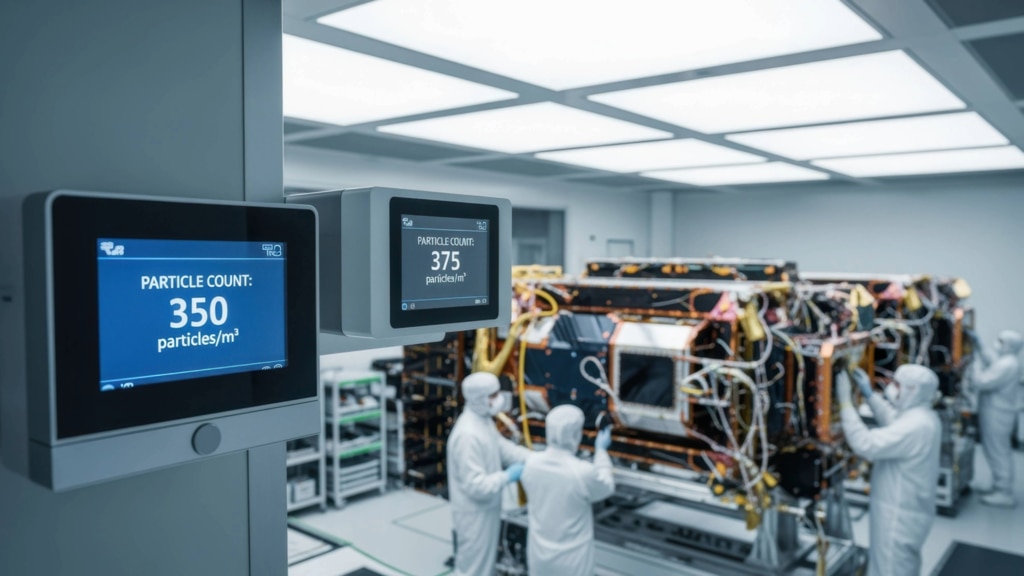
A cleanroom is a highly controlled environment designed to maintain extremely low levels of airborne particles, contaminants, and pollutants. These specialized spaces are crucial for industries and research fields where even microscopic particles can interfere with sensitive processes or products. Cleanrooms are characterized by:
Cleanrooms are widely used in industries such as semiconductor manufacturing, pharmaceuticals, biotechnology, medical device production, and aerospace. The level of cleanliness in a cleanroom is classified according to the number of particles per cubic meter of air, with classifications ranging from ISO Class 1 (most stringent) to ISO Class 9 (least stringent).
Cleanroom classifications are standardized systems used to define the level of cleanliness in controlled environments.
The two most widely recognized standards are ISO 14644-1 and Federal Standard 209E (now obsolete but still referenced).
Here's a comparison of these classification systems:
ISO 14644-1 | Federal Standard 209E | Maximum particles ≥0.5μm per m³ |
ISO 3 | Class 1 | 1,000 |
ISO 4 | Class 10 | 10,000 |
ISO 5 | Class 100 | 100,000 |
ISO 6 | Class 1,000 | 1,000,000 |
ISO 7 | Class 10,000 | 10,000,000 |
ISO 8 | Class 100,000 | 100,000,000 |
ISO 14644-1 provides a more comprehensive range of classifications, including ISO 1 and 2 for extremely clean environments and ISO 9 for less stringent requirements.
The pharmaceutical industry often uses additional classifications based on EU GMP guidelines, which define Grades A, B, C, and D, corresponding to specific ISO classes in both "at rest" and "in operation" states.
Cleanroom contamination control is crucial for maintaining the integrity of controlled environments. Key strategies include:
Effective contamination control requires a comprehensive approach, combining facility design, personnel management, and ongoing monitoring to ensure cleanroom environments consistently meet their specified cleanliness standards.
Cleanrooms employ two primary airflow patterns to maintain particle-free environments: laminar (unidirectional) and turbulent (non-unidirectional) flow.
Laminar airflow moves in uniform, parallel layers, effectively sweeping particles downward and out of the cleanroom.
This technique is crucial for highly sensitive applications requiring ISO 5 or cleaner environments. Turbulent airflow, while less controlled, is suitable for less stringent cleanroom classifications and offers cost-effective particle dilution.
Key components of cleanroom airflow systems include:
Proper airflow design and management are essential for achieving and maintaining the required cleanliness levels in cleanroom environments.
Monitoring ambient air cleanliness involves using specialized equipment and techniques to measure various pollutants and particulate matter. Key methods include:
Data from these monitoring systems is typically collected, analyzed, and reported to relevant authorities to assess compliance with air quality standards and inform pollution control strategies.
Regular calibration and quality assurance procedures are essential to ensure accurate and reliable measurements.
Please feel free to ask us if you have any questions, inquiries or want our support.
Click here to download documents.
Click here for any questions.
Trivia, trends or information mainly for technologies.
Frequently Asked Questions.
WEBINAR archives available for free viewing.
© Matsushima Measure Tech