Dust Monitoring for Tunnel Sites
Dust monitoring and control solutions for tunnel construction sites


Dust monitoring and control solutions for tunnel construction sites
Introduction
In tunnel construction work, airborne dust is a pervasive challenge that affects not only construction efficiency but also the health and comfort of workers.
High levels of dust can make it difficult for workers to remove their masks even during breaks, leading to discomfort and potential long-term health risks.
To address this issue, continuous dust monitoring and effective dust control measures are essential to maintain a safe and comfortable working environment.
This case highlights how dust monitoring technology was applied to improve air quality within an underground rest area at a tunnel construction site, enabling both safety improvements and enhanced worker comfort.
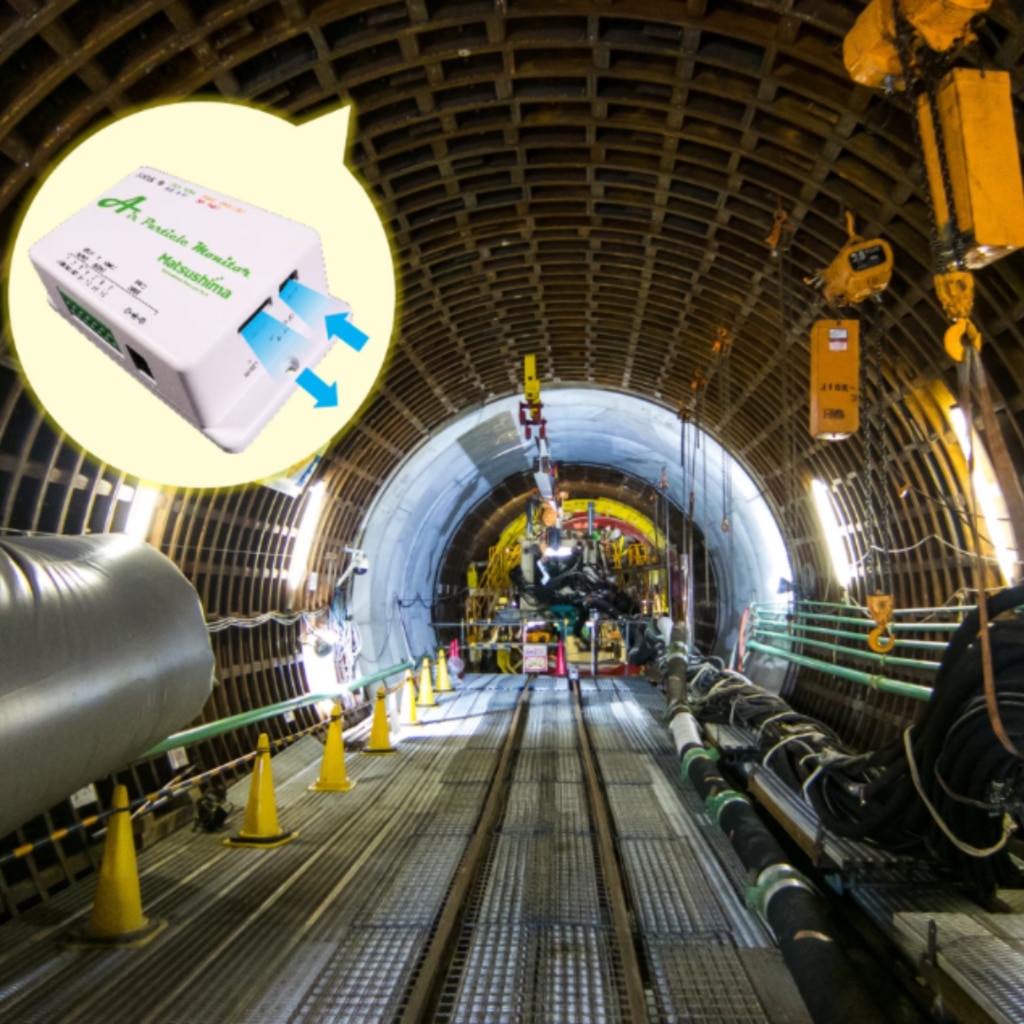
01 | High Dust Concentration Even During Breaks |
Rest areas in tunnel construction sites are often located close to excavation zones, allowing fine dust particles to enter and accumulate. As a result, workers may still be exposed to airborne dust even while resting.
02 | Difficulty Removing Masks and Ensuring Comfort |
Because of poor air quality, workers may find it uncomfortable or unsafe to remove their dust masks during breaks. This reduces rest effectiveness and can increase physical stress over long working hours.
03 | Lack of Continuous Air Quality Monitoring |
Many temporary rest spaces do not have real-time dust monitoring systems, making it difficult to detect hazardous dust levels promptly. Without proper monitoring, effective ventilation and dust control measures cannot be implemented at the right time.
Solution
24-hour real-time continuous dust monitoring with the Air Particle Monitor helps solve these challenges.
The Air Particle Monitor detects even small amounts of dust ingress and provides a dust concentration output signal.
This enables automated and energy-efficient control of ventilation systems, optimizing air quality while reducing unnecessary power consumption.
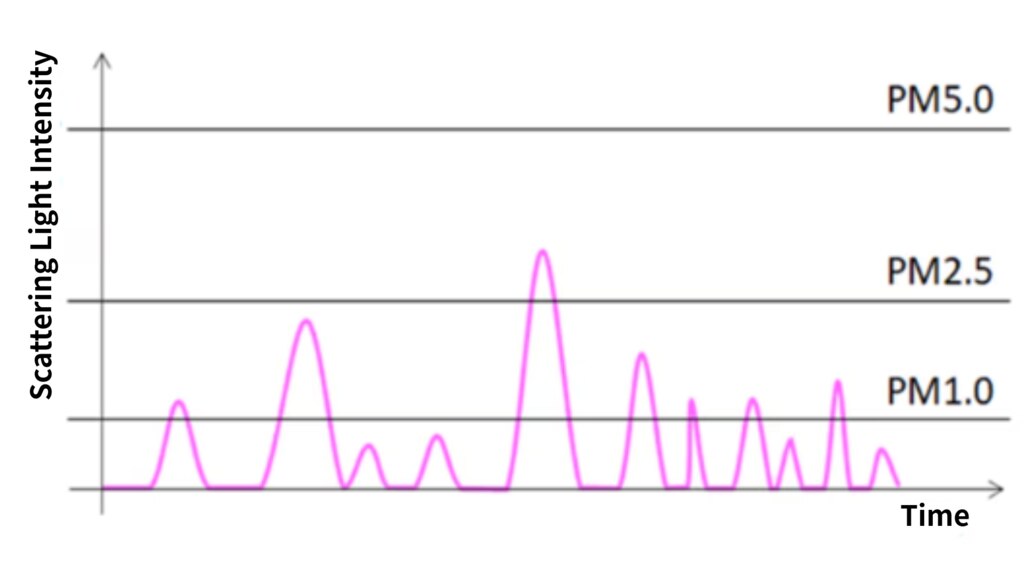
Provides continuous measurement across a wide concentration range from 35 to 1,000 µg/m³.
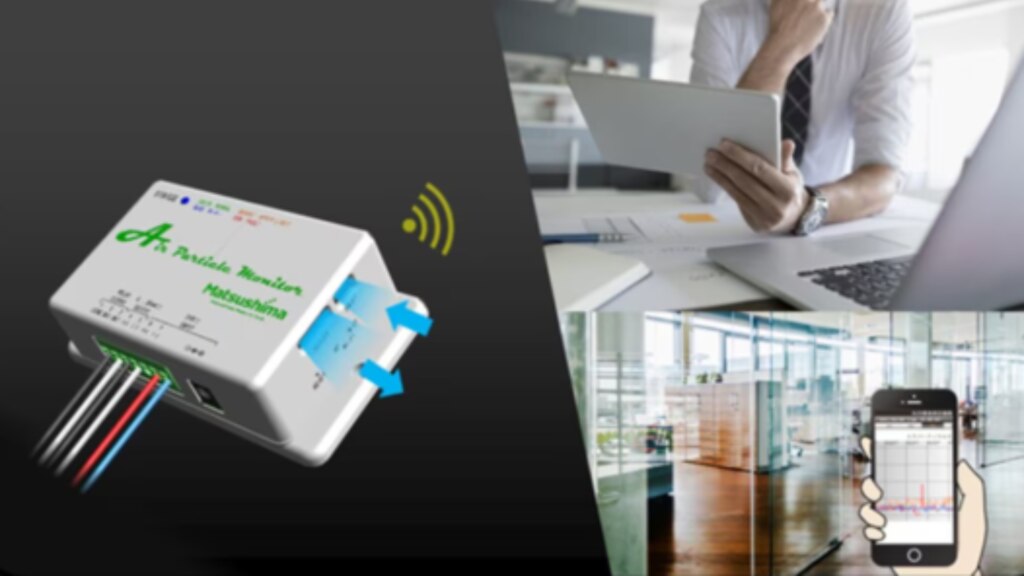
Remote monitoring of measured values via the built-in Wi-Fi function.
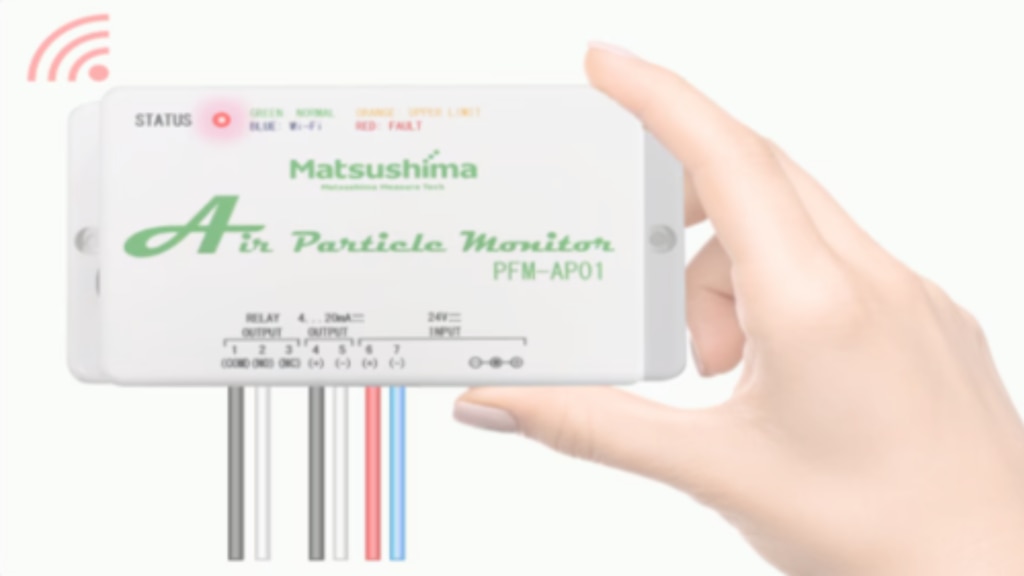
The 4–20 mA analog output and relay contact interface allow integration with external alarm and ventilation control systems.
Achieved by the technology
01 | Improved Worker Safety and Health Protection |
Continuous monitoring of airborne dust concentration helps maintain a cleaner rest environment, reducing worker exposure to fine particles and supporting long-term health and occupational safety.
02 | Enhanced Comfort and Better Rest Quality |
By detecting dust intrusion early and ensuring proper air quality, workers can remove masks more comfortably during breaks, improving rest effectiveness and overall working conditions.
03 | Energy-Efficient Ventilation Control and Cost Reduction |
The Air Particle Monitor provides real-time dust concentration signals that allow ventilation systems to operate only when necessary. This optimizes airflow management while reducing unnecessary power consumption and operating costs.
Please feel free to ask us if you have any questions, inquiries or want our support.
Click here to download documents.
Click here for any questions.
Trivia, trends or information mainly for technologies.
Frequently Asked Questions.
WEBINAR archives available for free viewing.
© Matsushima Measure Tech