Belt Conveyor Troubles and Solutions
Causes, Impacts and Efficient Countermeasures


Causes, Impacts and Efficient Countermeasures
Belt Conveyor Safety Operation
Belt conveyors are effective for transporting large amount of raw material or fuel and so widely used in materials industry, energy industry and so on.
Accidents are relatively decreasing nowadays but it may cause various troubles when facilities become old.
So, it is important to understand characteristics of belt conveyors for stable operation of belt conveyors and safety of workers.
This article shows such typical troubles and those countermeasures.
Problems at the site
Serious troubles or accidents may occur in conveyor belt operation, such as:
To prevent these problems, regular inspections, installation of appropriate safety devices, and safety training for workers are essential. Other important measures include the introduction of emergency stop systems and the maintenance of fire prevention equipment.
Causes of Troubles, Countermeasures and Recommended Safety Devices
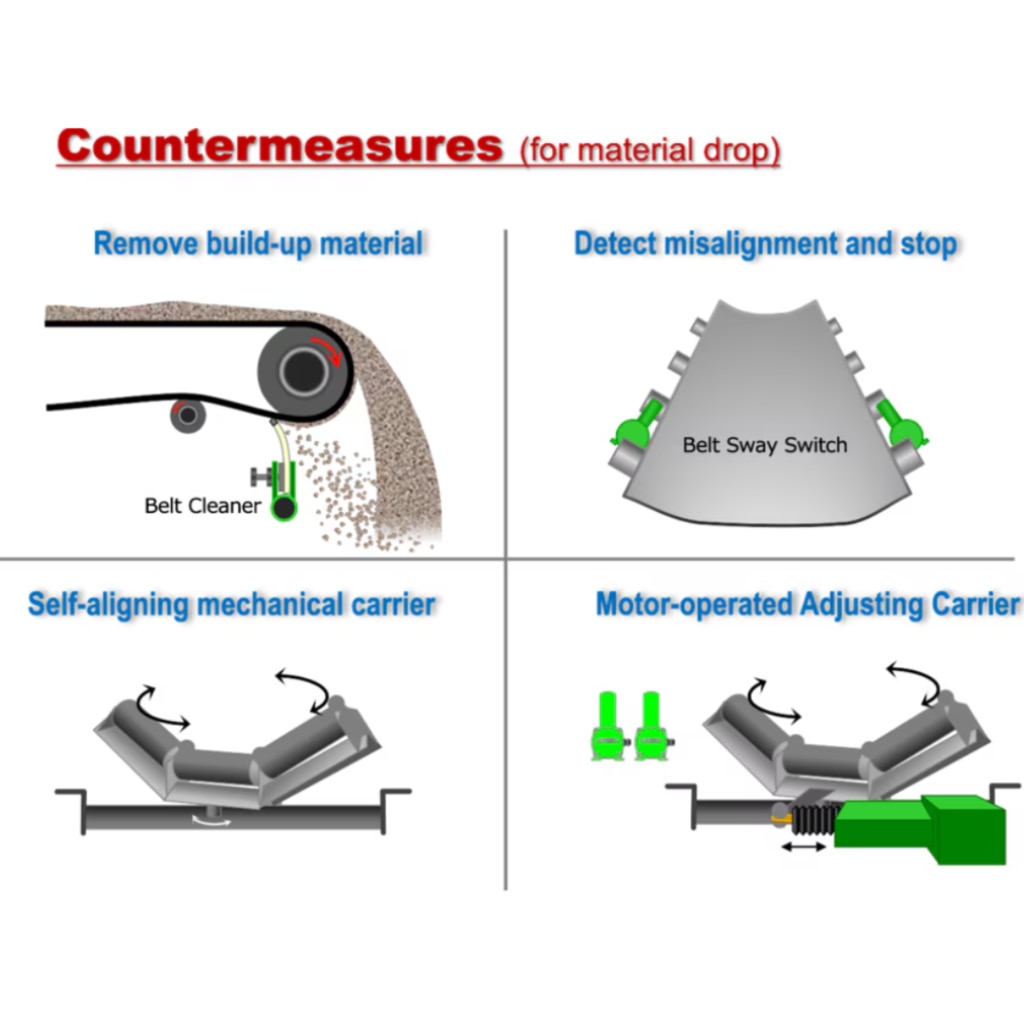
Common causes of this trouble include the following:
These issues can lead to conveyor belt misalignment (belt snaking), which may result in materials spillage, production losses, and increased maintenance costs.
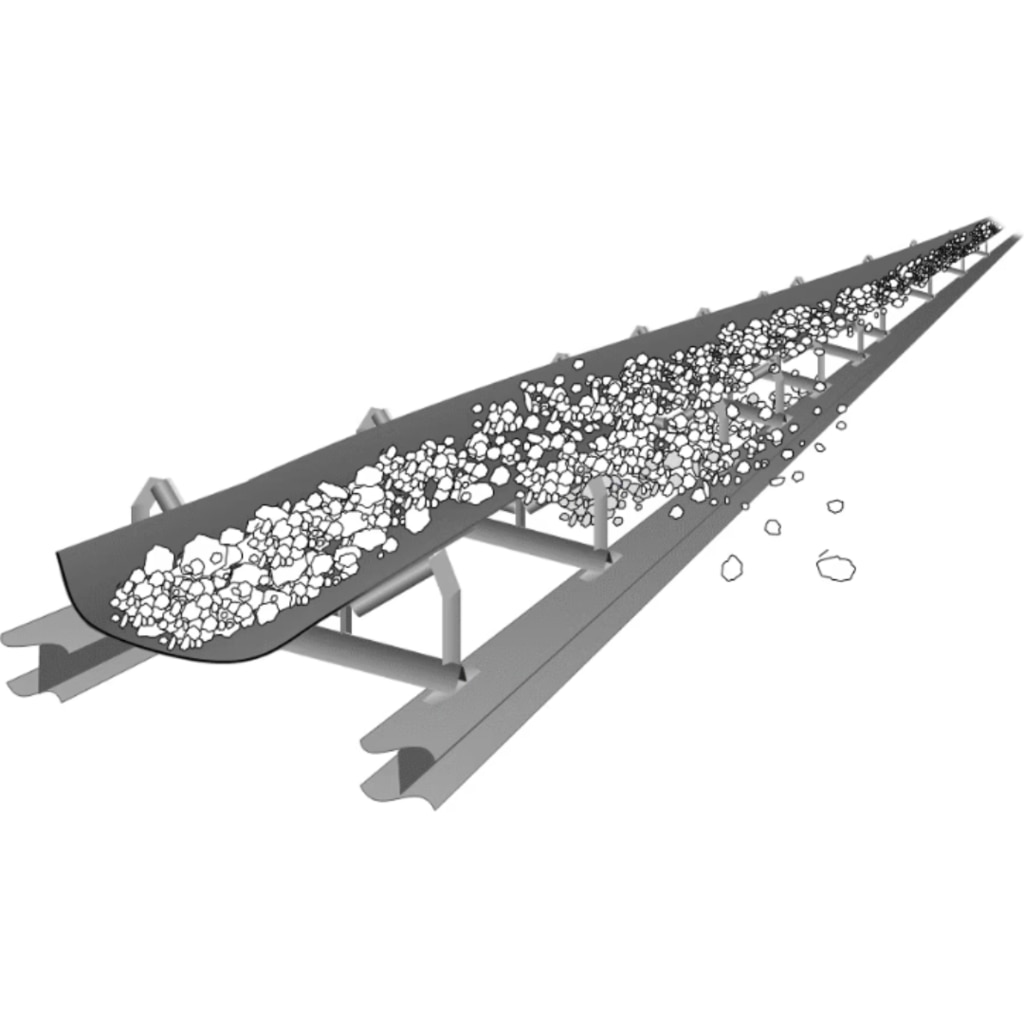
Following equipment is effective for preventing this trouble:
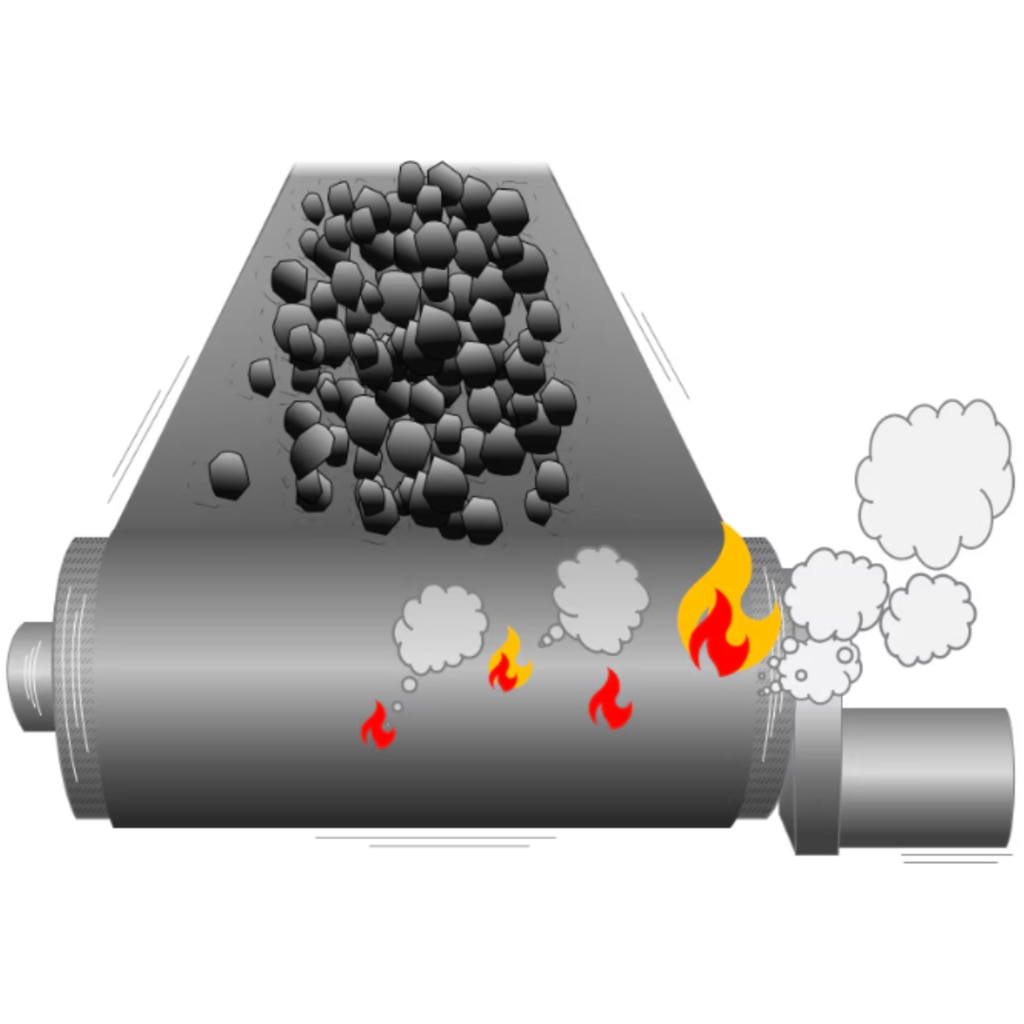
Common causes of this trouble include the following:
These conditions can lead to fire accidents, resulting in production losses, increased maintenance costs, personal injury, health hazards, and air pollution.
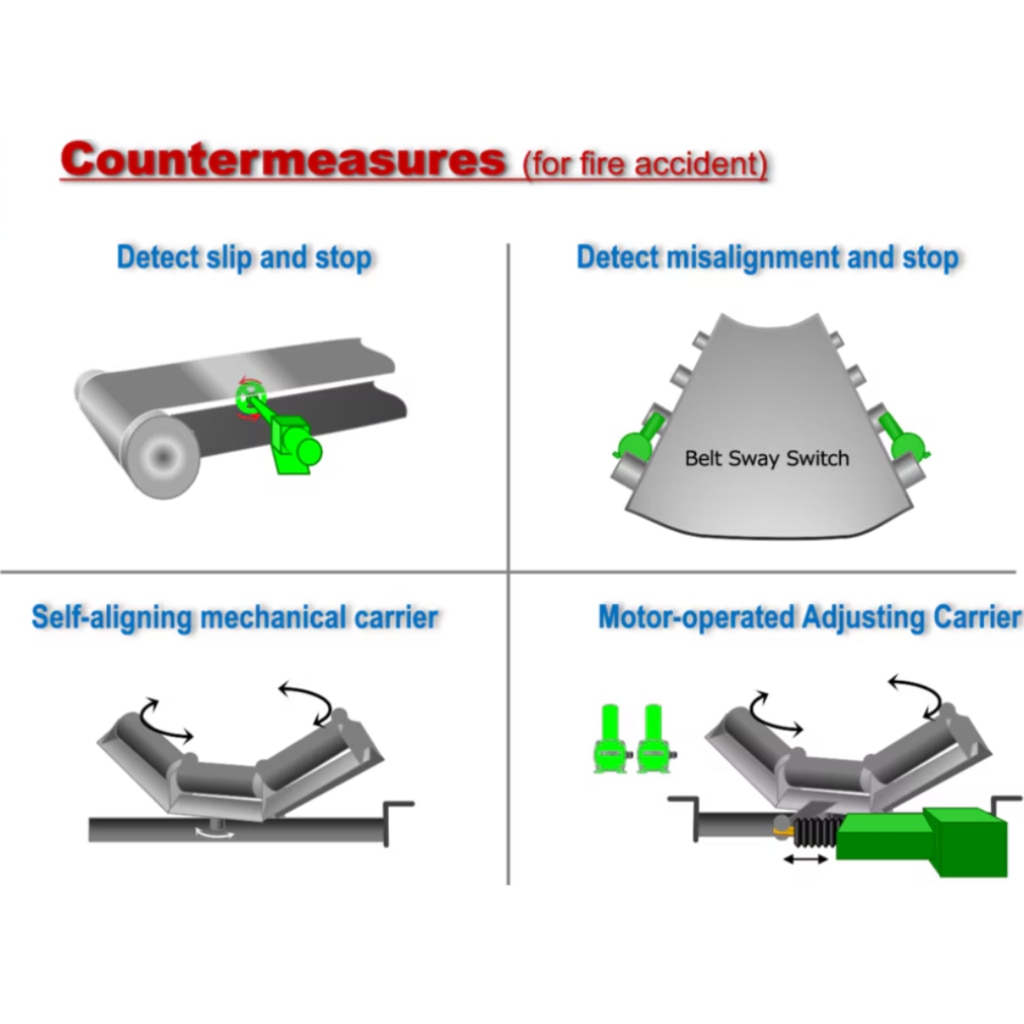
Following equipment is effective for preventing this trouble:
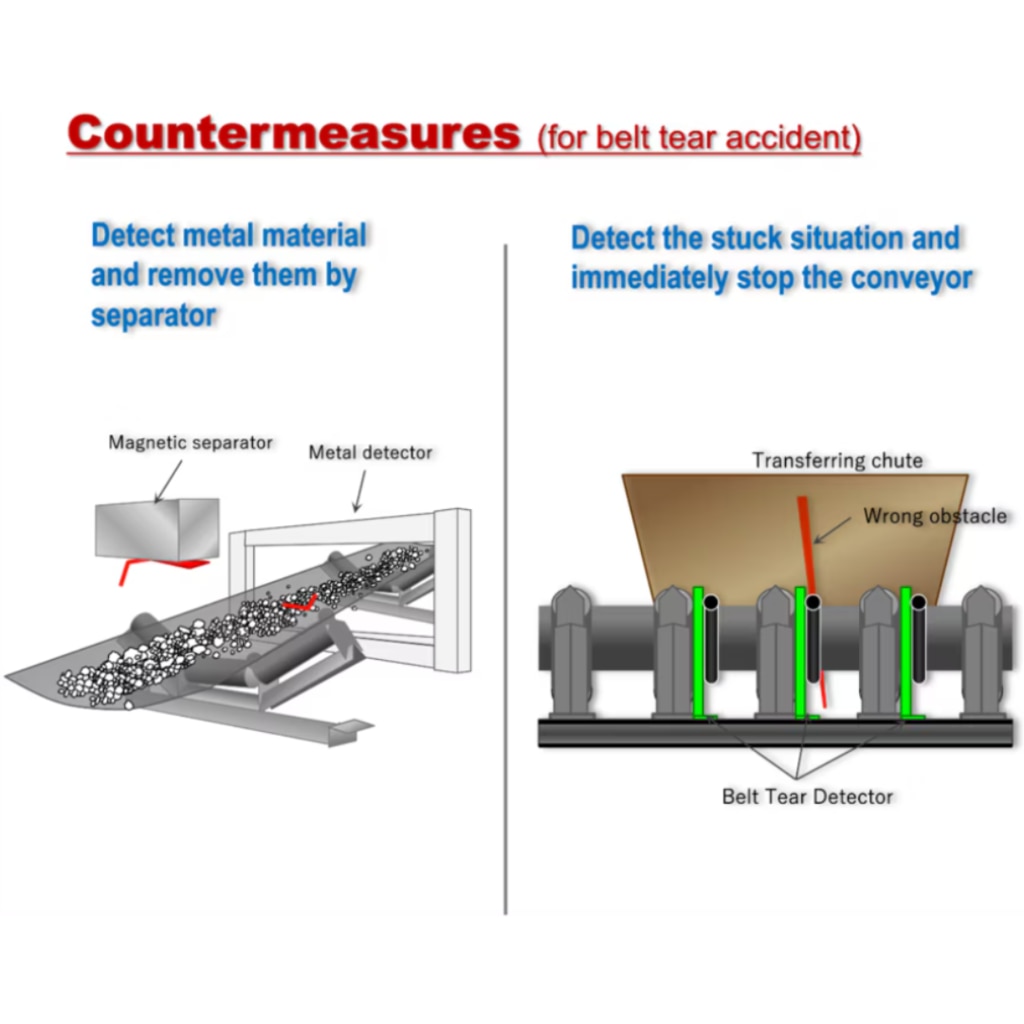
A common cause of this trouble is as follows:
Incorrect materials or foreign objects, such as sharp solids or metal pieces mixed into the transported material, can penetrate the conveyor belt and become lodged in the impact roller located directly beneath the transfer chute.
This can lead to a belt rip accident, resulting in production losses and increased maintenance costs.
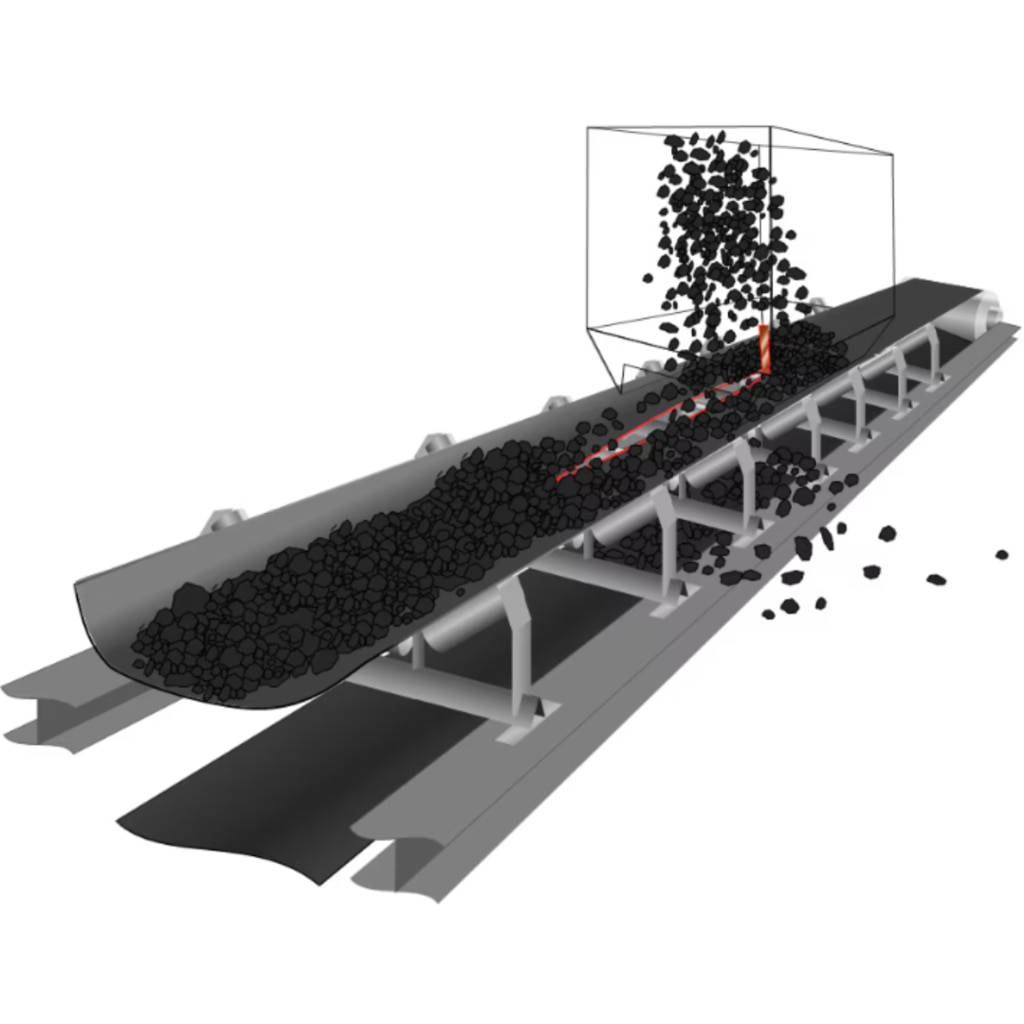
Following equipment is effective for preventing this trouble:
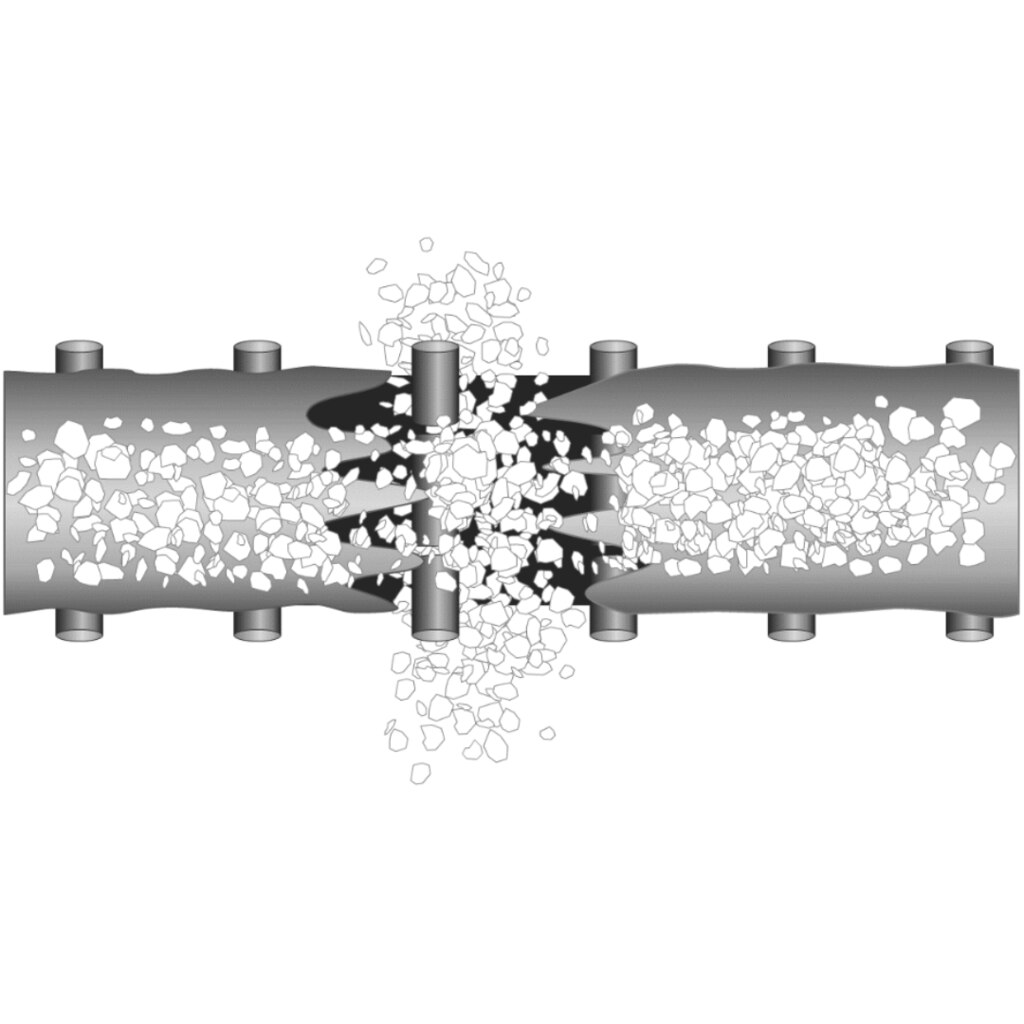
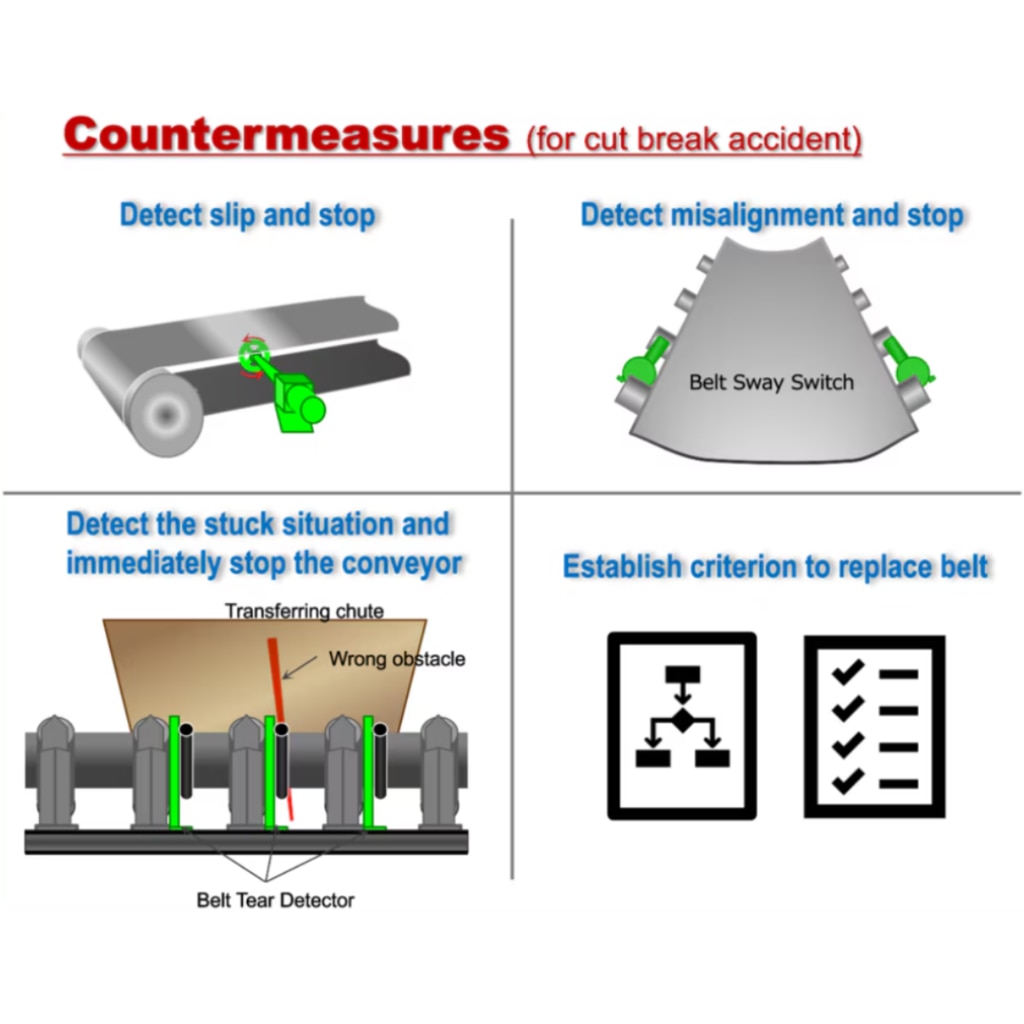
Common causes of this trouble include the following:
These conditions can lead to a belt cut or breakage accident,
resulting in production losses, increased maintenance costs,
and serious personal injury.
Following equipment is effective for preventing this trouble:
Common causes of this trouble include the following:
These conditions can lead to a chute blockage accident,
resulting in production losses, increased maintenance costs,
and environmental pollution.
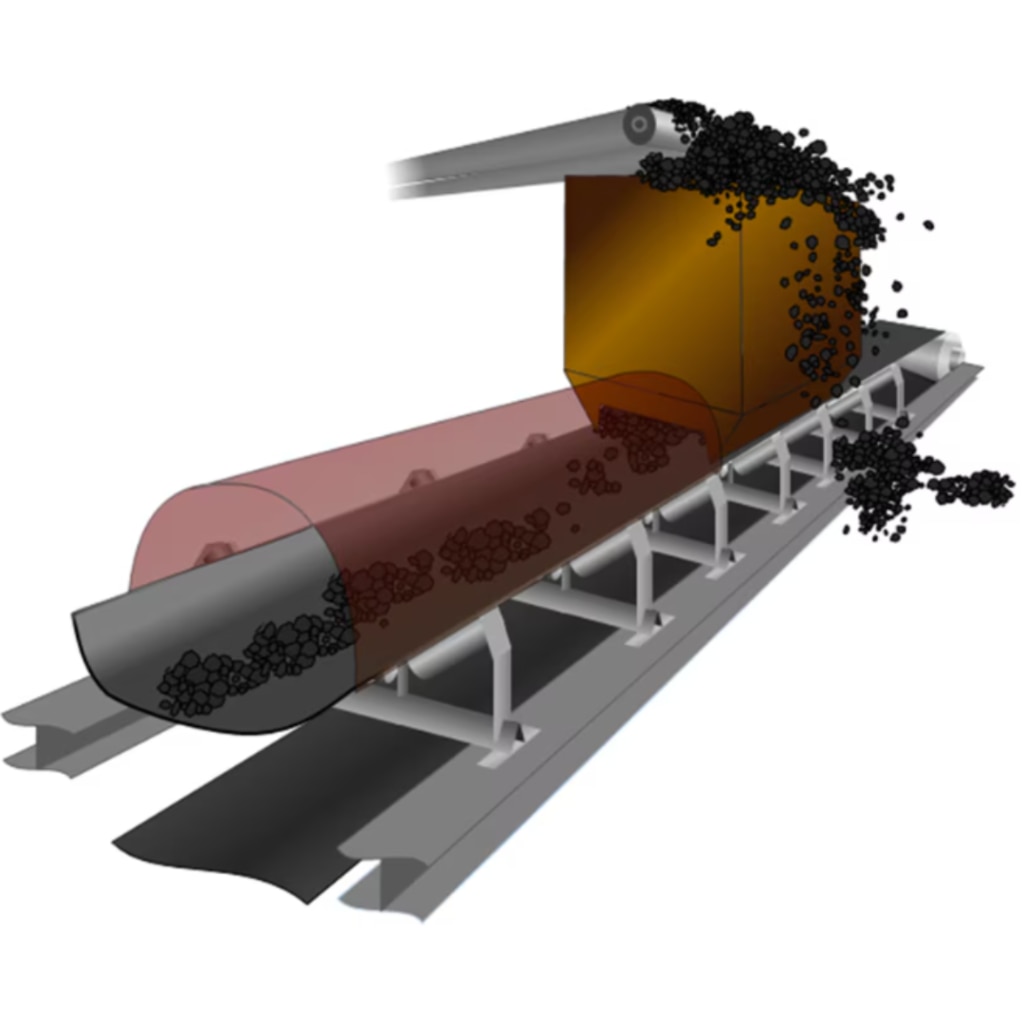
Following equipment is effective for preventing this trouble:
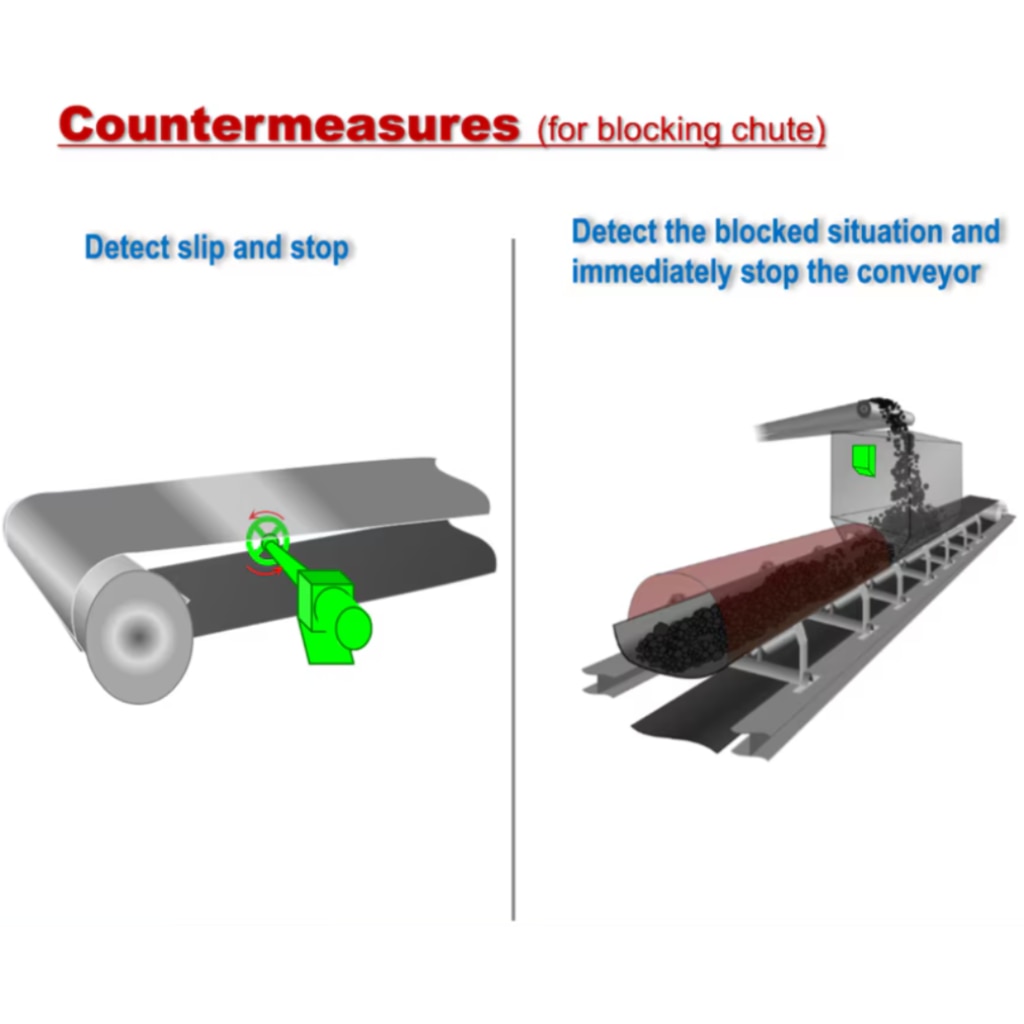
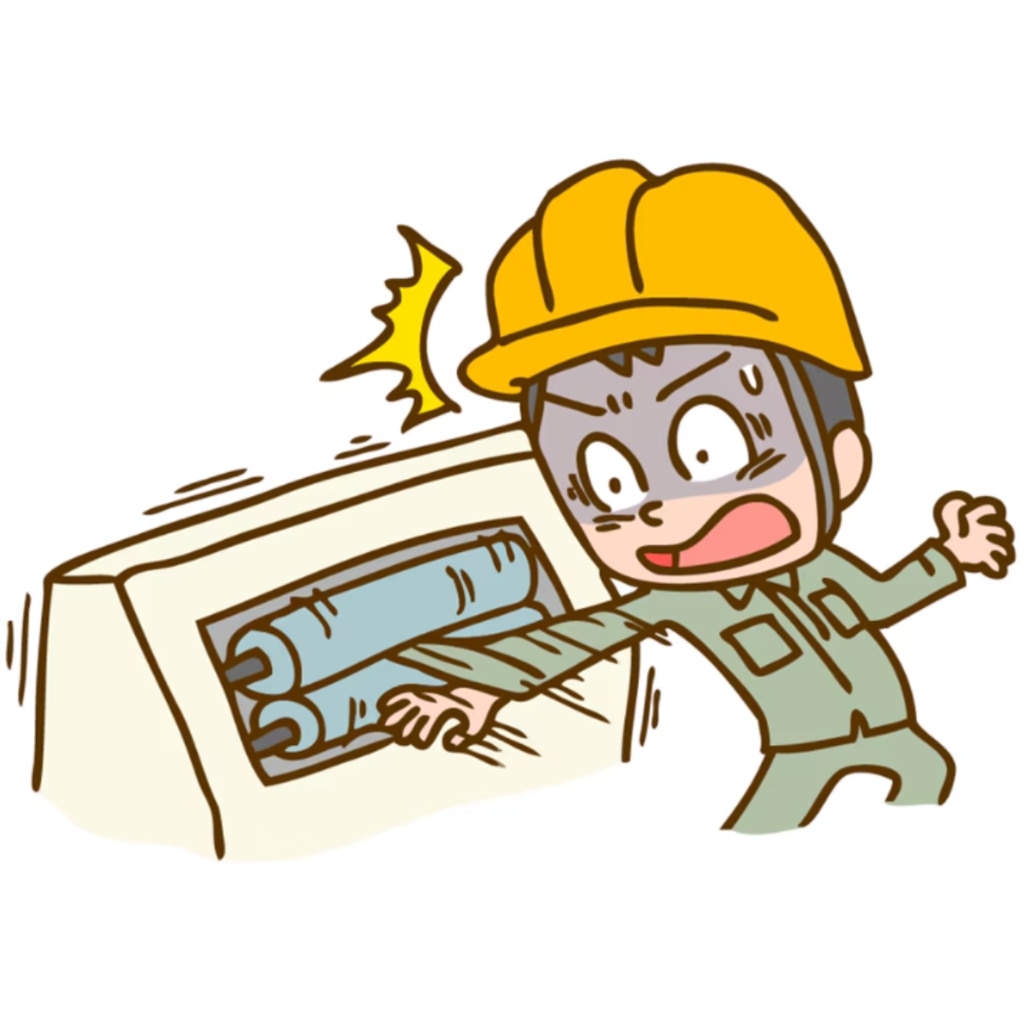
Common causes of this trouble include the following:
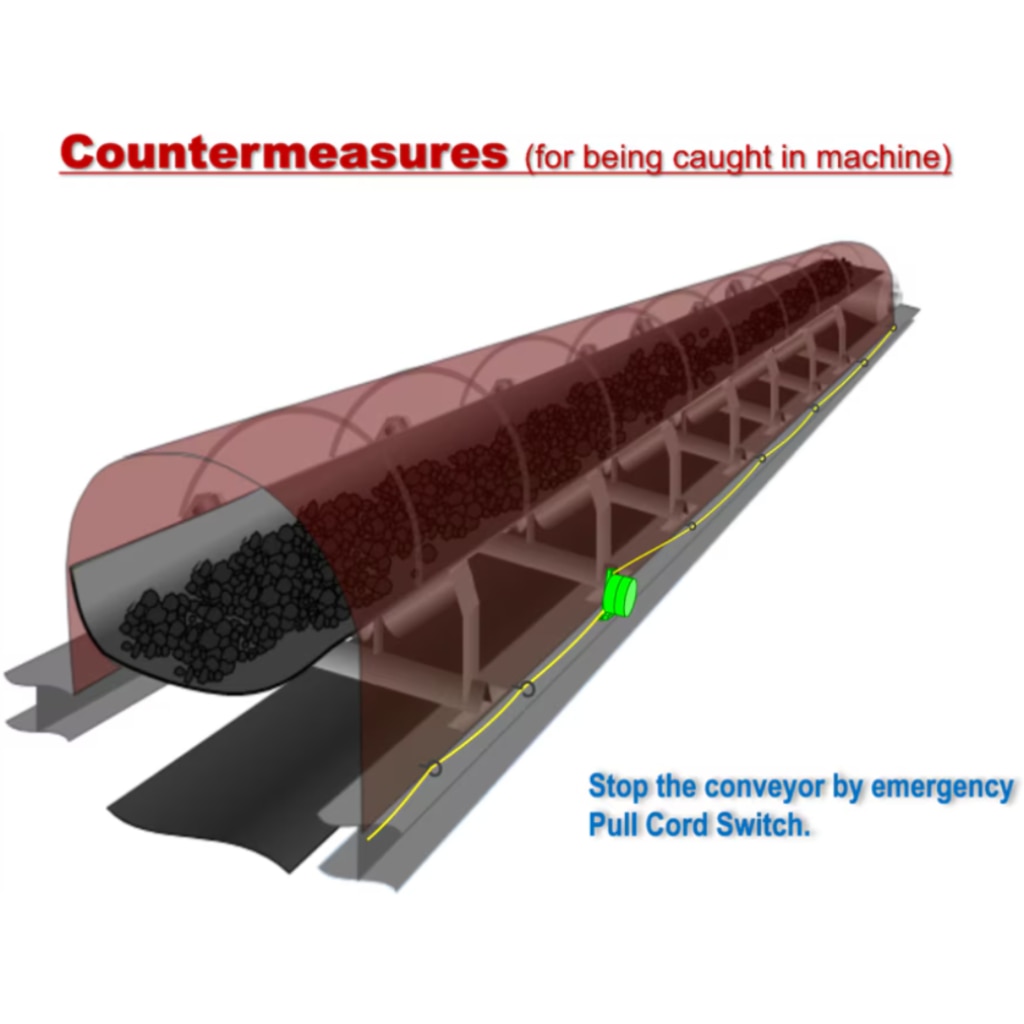
These conditions can lead to a caught-in or entanglement accident, resulting in serious personal injury and production loss.
Following equipment is effective for preventing this trouble:
Please feel free to ask us if you have any questions, inquiries or want our support.
Click here to download documents.
Click here for any questions.
Trivia, trends or information mainly for technologies.
Frequently Asked Questions.
WEBINAR archives available for free viewing.
© Matsushima Measure Tech