Welding Fume Monitoring for Workplace
Air Quality and Worker Safety
Air Dust Monitor Case Study | Welding Fume Monitoring to Verify Ventilation Performance


Air Dust Monitor Case Study | Welding Fume Monitoring to Verify Ventilation Performance
Introduction
Welding fumes generated during welding operations contain fine particulate matter that can pose serious health risks to workers when inhaled over long periods.
In metal fabrication plants and manufacturing facilities, effective welding fume monitoring is essential for protecting worker health, maintaining regulatory compliance, and verifying the performance of ventilation systems.
However, welding fumes are often invisible, making it difficult to detect hazardous concentrations without continuous monitoring.
By using an Air Dust Monitor, plants can measure airborne particulate concentration in real time and visualize welding fume levels to improve ventilation control and workplace safety.
A metal fabrication plant produces mechanical components by processing metals such as steel and stainless steel through cutting, bending, and welding operations.
Under these working conditions, employees may be exposed to airborne welding fumes and fine particulate matter, which can increase the risk of developing occupational lung diseases such as pneumoconiosis.
The symptoms of pneumoconiosis often do not appear in the short term, but may develop gradually after long-term exposure.
To protect worker health and reduce these risks, the plant has implemented various countermeasures, including the use of protective respirators, ventilation systems, and periodic workplace air-quality inspections.
However, because fine welding fumes are invisible and difficult to detect, the plant was seeking a more effective solution for real-time monitoring of airborne particulate matter.
Ventilation Facility for Welding Fume Sites
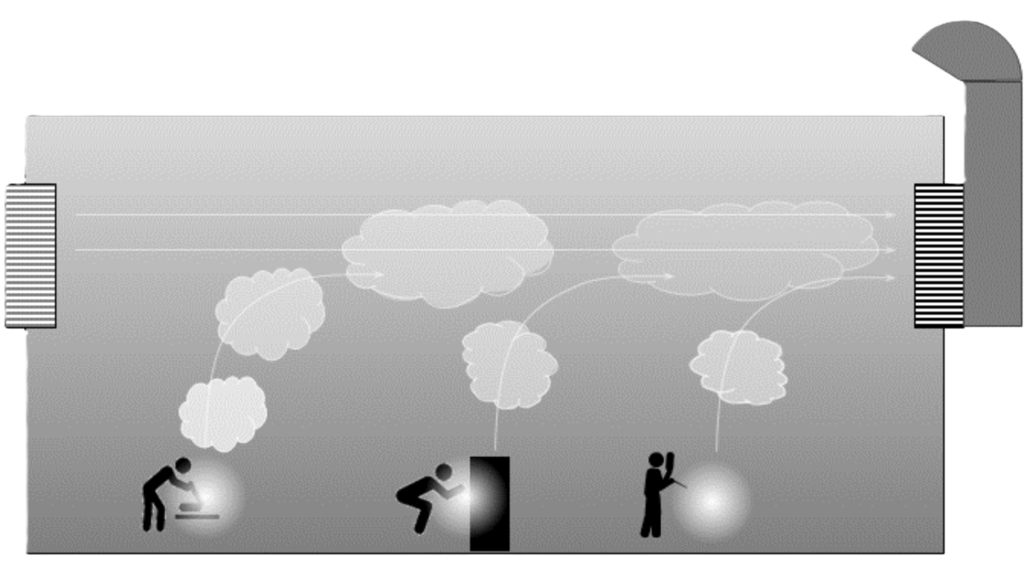
01 | Welding fumes are fine and invisible, making risk awareness difficult |
02 | Long-term exposure can lead to occupational lung diseases such as pneumoconiosis |
03 | Existing ventilation and protective measures cannot provide real-time fume concentration monitoring |
Solution
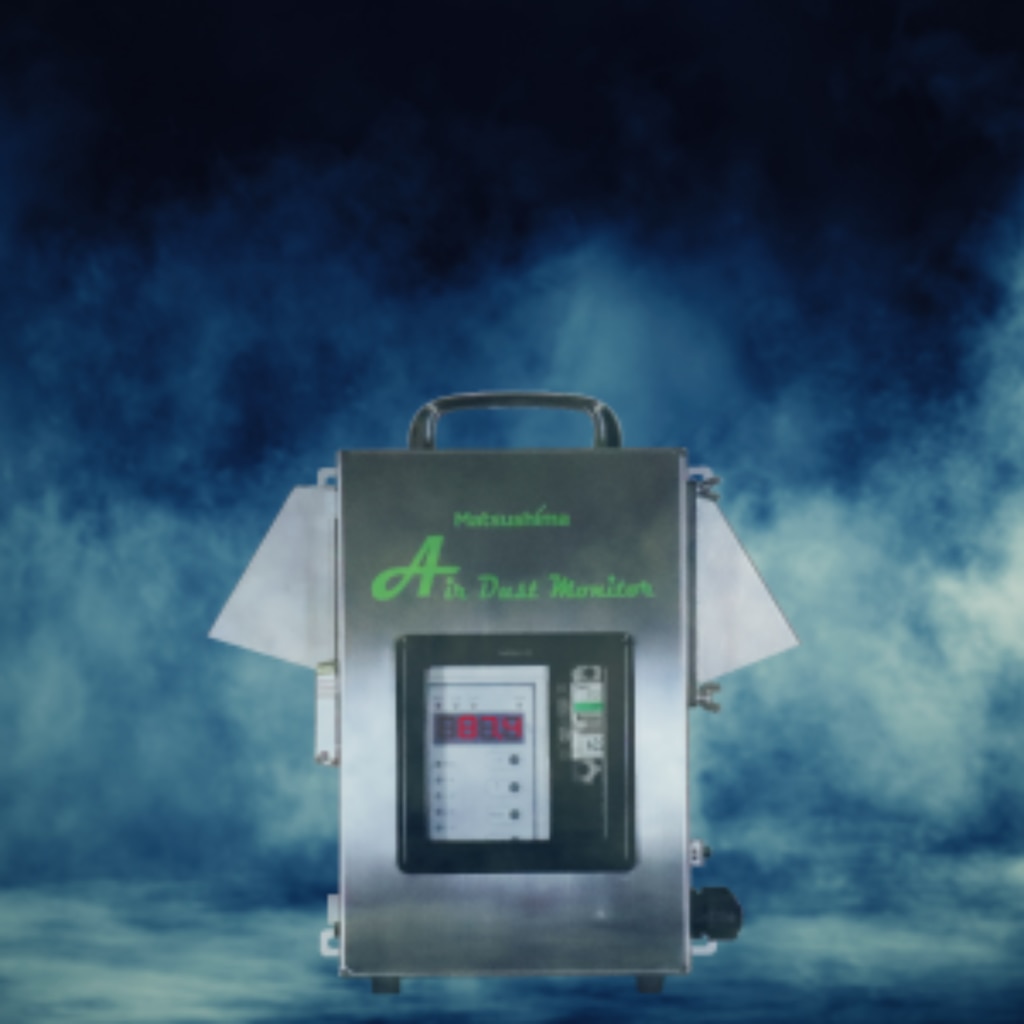
Air Dust Monitor is a portable device that integrates a triboelectric dust sensor and continuously measures airborne particulate concentration around the device.
By placing the Air Dust Monitor at the work site, welding fume levels can be monitored in real time, enabling early detection of abnormal fume conditions and supporting more effective ventilation control.
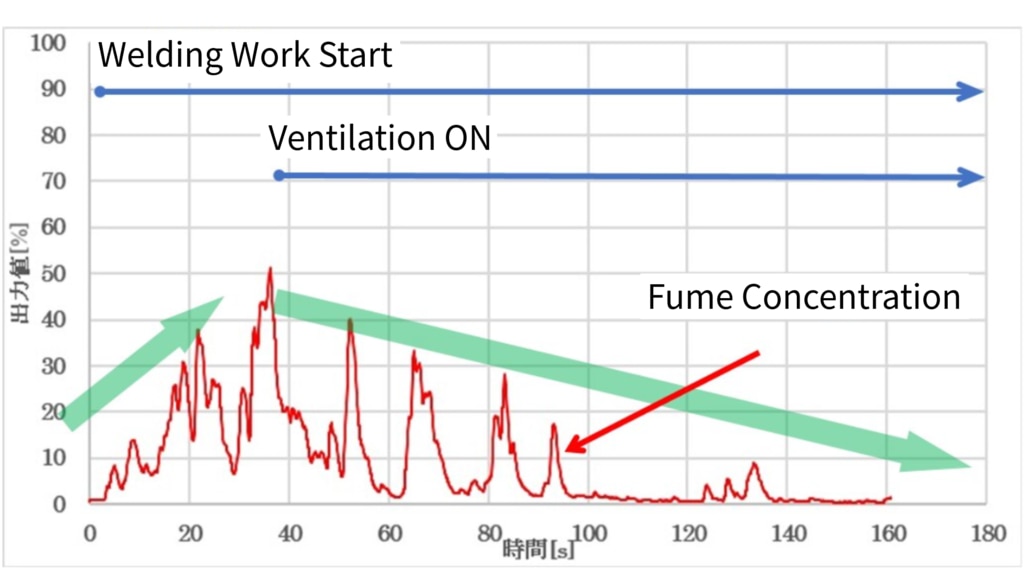
The trend chart on the right shows the welding fume concentration at the work site, continuously monitored by the Air Dust Monitor.
Based on the measured concentration signal, the ventilation system was activated, and the fume level decreased accordingly.
This approach not only helps protect worker health and safety, but also supports automated ventilation control and improved energy efficiency.

The lightweight and handle-equipped design allows instant measurement, and quick installation without duct work or complicated setup.

Provides continuous monitoring in place of human observation.
Useful for maintaining safe workplaces and clean production lines.
Capable of operating in high-concentration dust environments (g/m³) such as mining area, bulk handling facilities, etc. which are difficult to measure with conventional dust monitors (mg/m³).
01 | Improved Worker Health and Safety |
Continuous monitoring of airborne welding fumes helps reduce worker exposure to fine particulate matter. This supports the prevention of occupational lung diseases such as pneumoconiosis and creates a safer working environment.
02 | Real-Time Visualization and Early Detection of Abnormal Fume Levels |
Because welding fumes are invisible, it is difficult to recognize hazardous conditions. The Air Dust Monitor provides real-time concentration trends, enabling early detection of abnormal dust levels and prompt countermeasures.
03 | Optimized Ventilation Control and Energy Efficiency |
By linking ventilation operation to actual fume concentration, the plant can improve ventilation effectiveness while avoiding unnecessary continuous operation. This enables automated control and contributes to energy savings and more efficient workplace management.
Please feel free to ask us if you have any questions, inquiries or want our support.
Click here to download documents.
Click here for any questions.
Trivia, trends or information mainly for technologies.
Frequently Asked Questions.
WEBINAR archives available for free viewing.
© Matsushima Measure Tech